
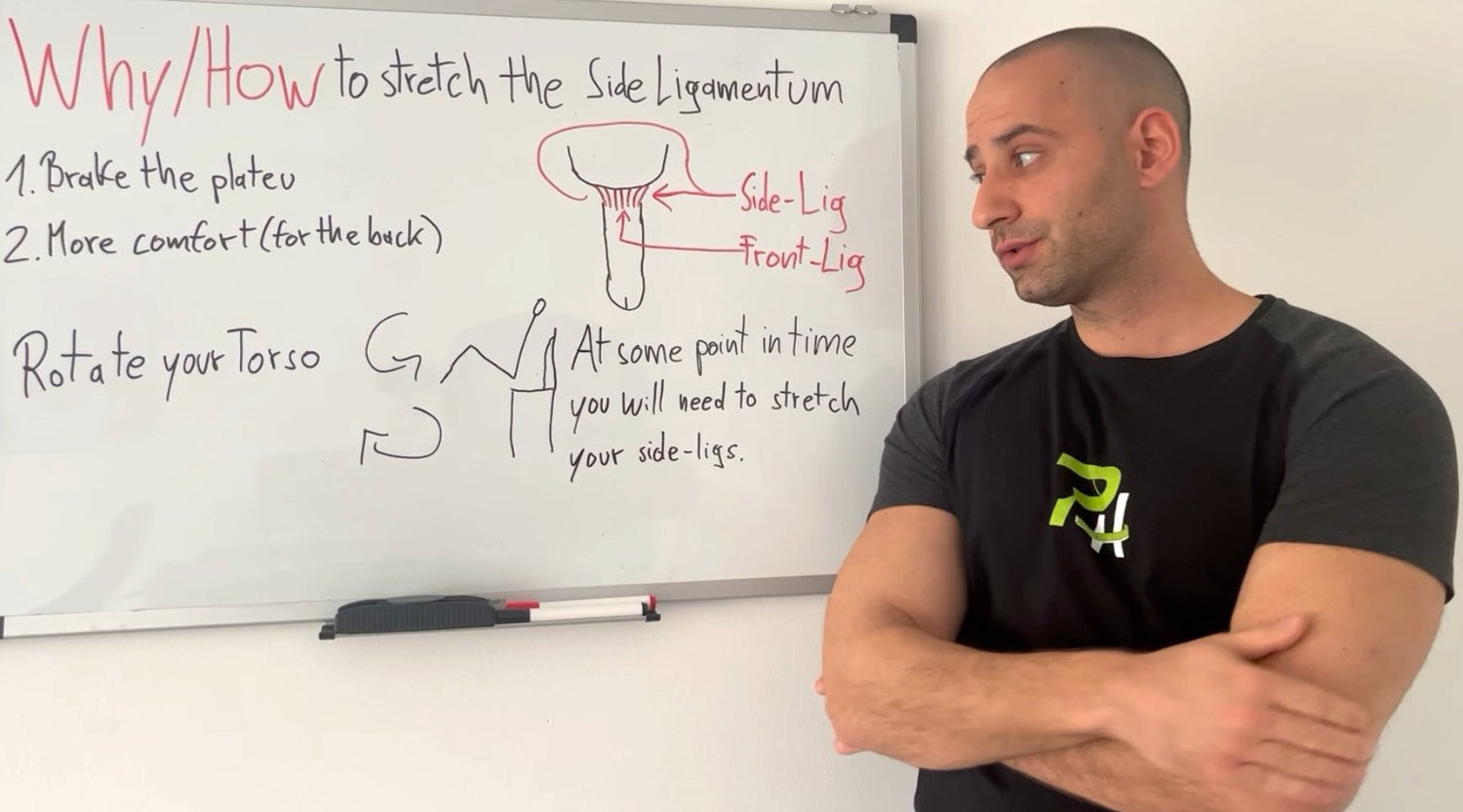
Understanding the Side Ligaments in Penis Hanging
What Are the Side Ligaments and Why Do They Matter?
When researching penis hanging and mechanical stretching devices, you may come across discussions about the suspensory ligament and surrounding connective tissues.
These anatomical structures contribute to the positioning and support of the penis. Understanding their general function can help provide context when reading about different mechanical devices and their intended use.
However, claims that specific ligaments can be permanently lengthened through particular hanging positions are not supported by sufficient reliable clinical evidence.
Understanding the Suspensory Ligament
The suspensory ligament of the penis is a connective tissue structure that helps support the penis in relation to the pubic region.
Other connective tissues also contribute to penile support and positioning.
The terms "side ligaments" and "side ligament stretching" are sometimes used in online discussions, but they do not necessarily describe clearly defined anatomical structures or medically established techniques.
Can Different Positions Affect Mechanical Tension?
The position of the body may influence how external forces are distributed during the use of mechanical equipment.
However, changes in body position do not establish that a particular ligament is being isolated or stretched in a controlled manner.
There is insufficient reliable clinical evidence demonstrating that rotating the torso during weighted penis hanging produces predictable anatomical changes or improves enlargement outcomes.
Important Safety Considerations
Mechanical tension applied to sensitive anatomical structures can involve risks, including discomfort, bruising, nerve irritation, and tissue injury.
Attempting to increase tension through additional weight, twisting, or unusual positioning may increase those risks.
Pain, burning sensations, and numbness should not be interpreted as signs of effective training.
Anyone considering mechanical devices involving penile traction should seek guidance from a qualified healthcare professional and understand the limitations of the available evidence.
Penis Hanging and Surgical Procedures
Mechanical hanging devices and surgical procedures are fundamentally different approaches.
Surgical procedures require professional medical assessment and involve their own benefits, limitations, and risks.
There is no reliable basis for claiming that stretching specific ligaments through penis hanging makes surgical procedures unnecessary or produces equivalent outcomes.
Understanding PHanger Equipment
PHanger offers mechanical hanging equipment and related accessories.
The device features an adjustable attachment mechanism and components intended for use according to the supplied product documentation.
Its design and available accessories can be reviewed on the PHanger product pages.
Product descriptions should not be interpreted as guarantees of permanent anatomical changes or treatment for medical conditions.
Conclusion
Understanding the anatomy of the suspensory ligament and surrounding connective tissues is important when researching penis hanging and related equipment.
Claims about targeted ligament stretching, permanent size changes, or predictable physical results should be evaluated critically.
For questions about penile anatomy, mechanical traction, or individual medical concerns, consult a qualified healthcare professional.
Explore PHanger products and accessories to learn more about the available equipment and its mechanical design.
Written by Rob – PHanger



Leave a comment
This site is protected by hCaptcha and the hCaptcha Privacy Policy and Terms of Service apply.